The Quilt Police Are Not Coming
Nobody is going to inspect your seams.
I know that sounds obvious. It also isn't how most people behave when they're learning to quilt. There's a nervousness that shows up early and never entirely leaves, the sense that there's a right way to do this and someone is keeping track of whether you managed it.
Nobody is keeping track. There is no certifying body. There's no exam, no license, no board that reviews your work and decides whether you're allowed to call it a quilt.
Where the feeling comes from
Partly it's real. Quilting has judged shows with actual judges and actual standards, and if you enter one, someone genuinely will look at your points and your stitch length. Guilds have opinions. Shops have preferences. Some of that is expertise worth respecting and some of it is just habit.
But almost none of it applies to a quilt you're making for your own bed.
The other part is that quilting inherited a lot of anxiety from somewhere else. Being neat. Not wasting things. Doing it properly. Making something that would hold up to a mother-in-law's eye. That's real history and I don't think it's silly. It just doesn't have to be your history.
What actually happens when your points don't match
The quilt is slightly less crisp than it would have been.
That's it. That's the whole consequence.
Nobody who receives that quilt is going to notice, and if they do notice they aren't going to care. People remember that you made them a quilt. They don't remember the seam allowance.
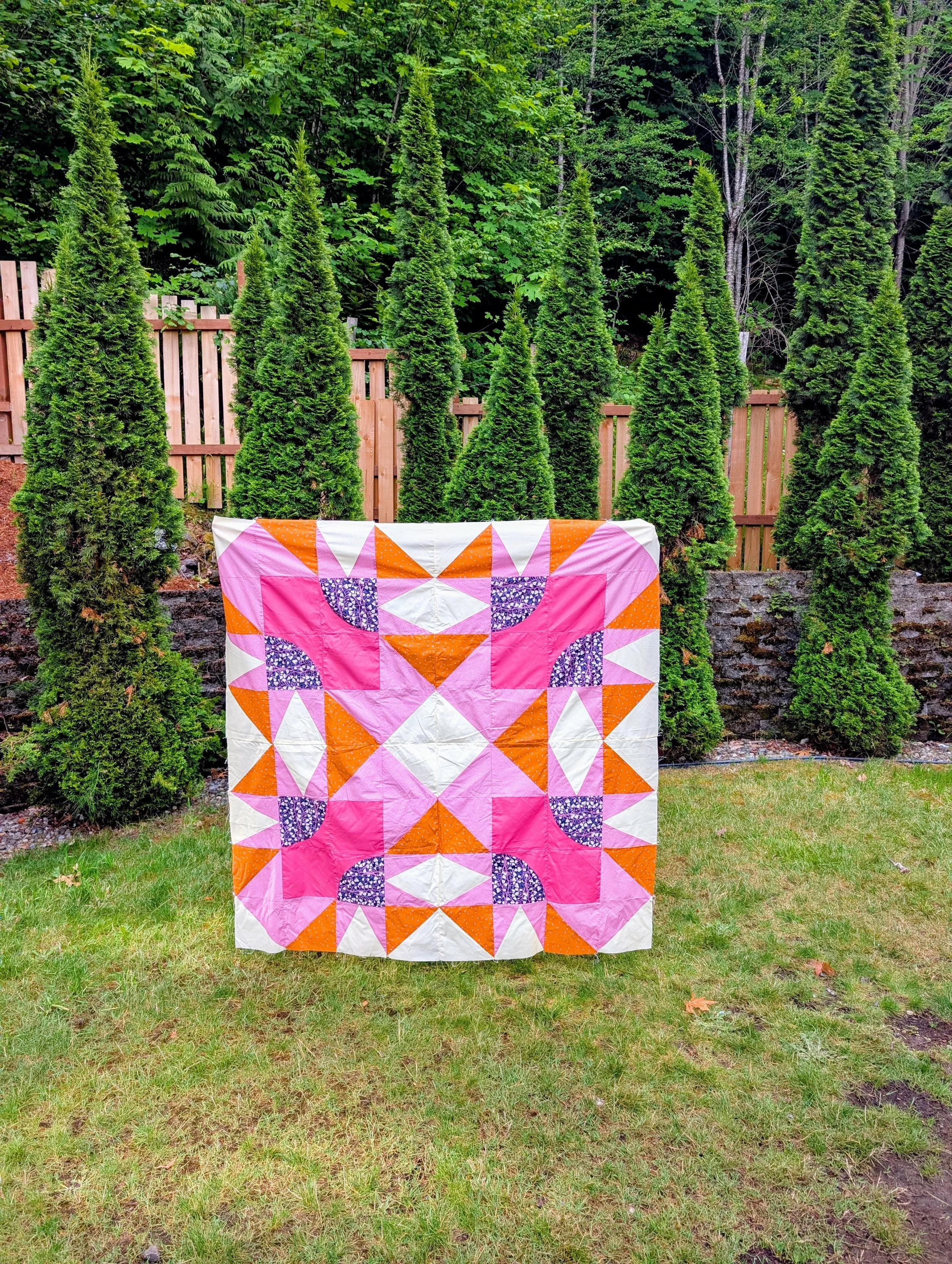
Meanwhile, the quilts I love most tend to have obvious problems in them. Utility quilts made from worn-out clothes, blocks that don't match because the maker ran out of one fabric and used another. Those quilts weren't made by people worrying about a standard. They were made by people who needed a blanket and used what they had.
The cost of the fear
Here's the part I actually care about, because it isn't really about seams.
The fear stops people from starting. It stops people from cutting into fabric they like, because what if they ruin it. It stops people from trying something they haven't done before. And it keeps experienced quilters making the same safe thing for twenty years, because deviation feels like risk.
That's a lot of unmade work.
What to do instead
Make something you don't have a plan for. Cut into fabric you're precious about, or better, cut into a dollar bedsheet so the precious part isn't even in play. Finish something imperfect and give it away and watch nobody say a word about it.
Learn the techniques, genuinely. Accuracy is a real skill and it's worth having, because a rule you understand is a rule you can break well. But learn it as a tool, not as a test.
And when you catch yourself hesitating over whether you're allowed to do something: you are. There's no one to ask.
The quilt police are not coming. They were never coming. You can go ahead.