How to Choose Fabric Without Making Yourself Crazy
Fabric selection is where a lot of projects die. Not because it's hard, but because it's infinite. Everything goes with something, nothing goes with everything, and you can spend a whole evening moving pieces around and end up back where you started.
Here's how I keep it small.
Start with what you have, not what you want
Most fabric paralysis comes from shopping. You're choosing from every fabric that exists, which is a much worse problem than choosing from the eleven things in your bin.
I work mostly from thrifted bedsheets, and that's partly a limitation I chose on purpose. What's in the pile is what I get. That takes a decision with infinite options and turns it into one with about a dozen, and a dozen is a size a person can actually think about.
If you have a stash, use the stash. If you're buying, buy less than you think you need.
A note on sheets, since people ask
Percale, 100% cotton. That's the whole spec.
Percale is a plain weave, tight and crisp, and it behaves almost exactly like quilting cotton once it's prepped. Sateen is softer and shiftier and I'd skip it while you're learning. Anything with polyester in it presses badly and won't hold a crease, and you'll fight it the whole way.
Check the tag. If there's no tag, feel it. Cotton percale has a dry, papery hand and a faint rustle. Blends feel slick.
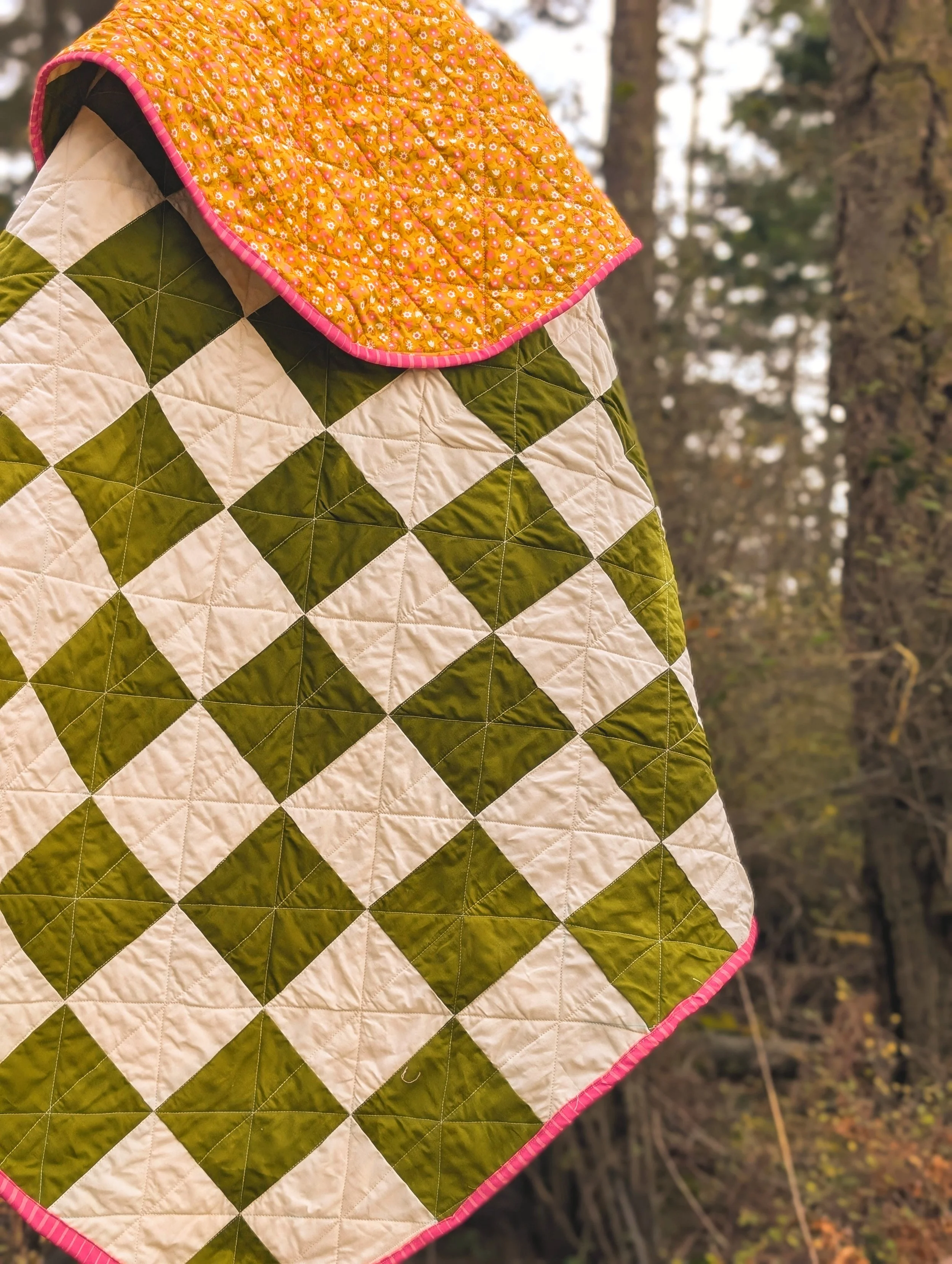
Prep them properly and they'll behave
This is the part people skip and then decide sheets are difficult.
Wash hot, dry hot. You want the shrinking over with, and you want whatever's still in the fibers gone. Iron while damp. Then starch, generously, and press again.
Starched percale cuts like paper. It doesn't stretch on the bias, it doesn't shift under the ruler, and it takes a crease and keeps it. It'll behave better than a lot of quilting cotton straight off the bolt.
Cut around the worn spots and the hems. A flat sheet gives you something like four usable yards, which is more than most people expect.
Then: value, not color
Once you've got a working pile, the only question that really matters is light, medium, dark.
Color is what everyone thinks about and value is what actually makes a quilt read. Two fabrics you love in colors you love will disappear into each other if they're the same lightness. That's the muddy quilt problem, and it's almost always value.
Photograph your pile and look at the photo in black and white. What was obvious in color will often turn out to be four versions of medium.
Aim for a spread. Something genuinely light, something genuinely dark, and the rest in between.
Pick a small number and commit
Three to five fabrics. Not eight.
More fabrics feels generous and reads as noise. A limited palette is what makes a quilt look intentional, and it's also what makes the making faster, because you stop re-deciding every time you pick up a piece.
Choose them, put the rest back in the bin, and don't revisit it. If something isn't working an hour in, swap one. Not all of them.
When you're stuck, add a constraint
If you're circling and can't land, make the decision smaller.
Only fabrics from one shopping trip. Only things that were already in the same drawer. Only three colors. Only one print and the rest solid. Only sheets that came from the same estate sale, which is a rule I've used more than once and which produces oddly coherent results.
An arbitrary rule beats no rule. You're not looking for the correct combination. There isn't one. You're looking for a way to stop deliberating and start sewing.
Pick a handful, prep them properly, check your values, and go. You'll learn more in the first hour of cutting than in an evening of arranging.